
How to Find a Reputable Chimney Sweep
To find a reputable chimney sweep, ask what the visit includes, how the sweep checks the flue, and whether you’ll receive written findings before you book. Compare the answers—not just the task name—and choose a provider who explains why each recommended service is needed.
Need help now? (380) 234-1398
How to Find a Reputable Chimney Sweep Before You Book
Start with the scope, not a claim or a title. Ask the chimney sweep to describe what they will inspect or clean, which parts of the chimney are included, and what you will receive when the work is done. A clear answer helps you compare providers on the same basis.
A chimney cleaning removes soot and creosote from the flue, while an inspection evaluates the chimney and its components for condition and safety concerns. One service does not automatically mean the other is included. If you need a chimney sweep service, confirm whether the appointment is for sweeping, inspection, or both.
Match the Chimney Service to the Problem You See
Choose sweeping for soot or creosote buildup
Ask whether the quoted work covers removing deposits from the flue and what the sweep will check afterward. Thick, shiny deposits or recurring buildup call for a professional assessment rather than a guess based on what you can see from the fireplace.
Choose an inspection when you need a condition check
An inspection looks beyond removable soot to the chimney’s condition. Tell the sweep about changes to the fireplace or appliance, a recent chimney event, or a home sale so they can identify the inspection scope that fits the situation.
Ask about repair only when findings point to a defect
A damaged cap, liner, crown, or masonry may need repair rather than more cleaning. Ask the sweep to identify the part, describe the visible problem, and connect each recommendation to a finding before you approve additional work.
Questions That Clarify a Chimney Sweep’s Scope
Use these questions to get specific answers before you set an appointment. A provider should be able to explain the work in ordinary language, without turning a basic cleaning request into an unexplained list of add-ons.
- What exactly is included? — Ask whether the service covers the firebox, flue, smoke chamber, and other parts relevant to your setup. Have the sweep distinguish cleaning from inspection so you know what the appointment is meant to accomplish.
- How will you check the chimney? — Ask what can be assessed from the accessible areas and whether a closer view, such as a video inspection, is appropriate for your concern. The method should relate to the chimney and the question being investigated.
- What will I receive afterward? — Ask whether the sweep will summarize findings, identify any areas that need attention, and explain which work is essential versus optional. A useful report names the part and the observed condition rather than relying on a vague warning.
- How long should I set aside? — Ask for an estimated visit length after describing your appliance, access, and requested work. Cleaning alone and an appointment that also involves a detailed inspection or camera work can have different scopes.
Need help now? (380) 234-1398
Seven Steps to Screen a Chimney Sweep
A short check before booking can reveal whether the provider understands your concern and can explain the work. Keep notes so you can compare the answers without relying on a vague impression.
- Describe the appliance and concern — Tell the provider whether you have a fireplace, wood stove, or another setup, and describe what prompted the call. Note smoke, odor, visible deposits, or a recent change; check that the provider repeats the problem accurately.
- Name the work you are asking about — Say whether you want a chimney sweep, an inspection, or help diagnosing a concern. Check that the provider explains if the requested service answers your question or if another scope is needed.
- Ask what parts are included — Use plain names such as firebox, damper, smoke chamber, flue, liner, and chimney cap. Check that the answer identifies which parts will be addressed instead of promising an undefined full service.
- Ask how the flue will be assessed — Ask whether the sweep will use a flashlight for accessible visual checks or whether a camera inspection may be needed. Check that the method is tied to the condition being evaluated, not presented as an automatic add-on.
- Request the findings in clear terms — Ask how the provider will describe deposits, damage, or areas that need attention. Check that any recommendation identifies the part and explains the reason for the proposed work.
- Confirm the estimated visit length — Describe the work and ask how much time to set aside. Check whether the estimate accounts for an inspection or camera work as well as cleaning, so the visit is planned around the actual scope.
- Review the recommendation before approving more work — After the visit, compare the written findings with the proposed service. Check that each repair or additional task is linked to a specific observation and that you understand what happens next.
What Clear Chimney Findings Should Tell You
A useful explanation identifies what the sweep saw, where it is, and whether the finding calls for cleaning, inspection, repair, or monitoring. For example, “deposits in the flue” gives you more to work with than “your chimney is unsafe” without a location or explanation.
Ask how the sweep distinguishes routine deposits from a condition that needs repair. If a camera scan or another inspection method is recommended, ask what question it will answer and how the result will affect the next step. The CSIA Level 2 inspection procedure describes circumstances where a Level 2 inspection is recommended, including an appliance change, sale, relining, or a fire or weather event.
For routine maintenance guidance, the CSIA homeowner resources summarize the NFPA 211 recommendation for annual chimney inspections. Use that as a reason to ask about inspection scope, not as a substitute for an assessment of your particular chimney.
When a Chimney Concern Needs a Professional
A homeowner can describe symptoms and look for visible clues from a safe position, but should not climb onto the roof or enter the flue to investigate. Stop using the fireplace and contact a chimney sweep when a concern needs more than an ordinary visual check.
- Smoke enters the room — Note when the smoke appears and whether the damper is open, then stop using the fireplace until the cause is assessed. A recurring smoky fireplace can involve the flue, airflow, or another condition that is not solved by guessing.
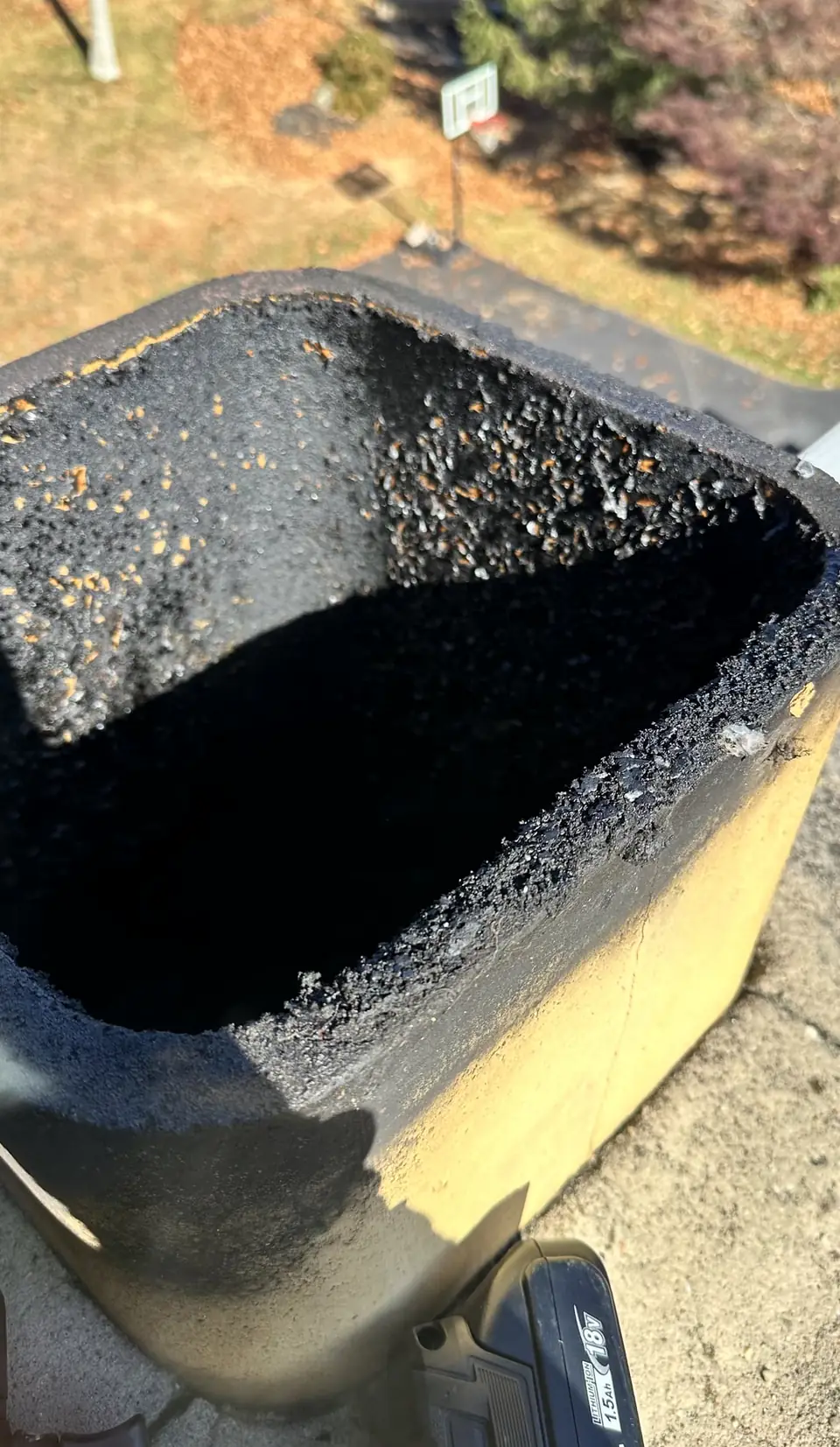
- You see heavy or shiny deposits — Do not scrape or burn off creosote yourself. Describe where you can see the buildup and ask for a professional assessment of the flue and the cleaning needed.
- A part looks cracked, loose, or displaced — A visible crack in masonry, a loose chimney cap, or a damaged damper can signal a maintenance or repair issue. Share a photo taken from a safe location and ask whether the concern calls for inspection before use.
- You suspect chimney damage after an event — Tell the sweep about the event and pause use until the chimney has been evaluated. Damage may not be obvious from the fireplace opening, so a visual look from below may not answer whether the flue is sound.
Need help now? (380) 234-1398
What to Expect From Ohio Chimney and Fireplace
Ohio Chimney and Fireplace serves Columbus and towns in the Columbus, Cincinnati, and Dayton metro areas. Owner Garrett Sullivan has 16 years of experience with chimneys and fireplaces, and the business explains the work clearly and recommends only services a homeowner needs.
When you contact us, describe the appliance and the issue you want addressed so we can identify the service to discuss. Our chimney sweep service starts at $89; for a separate cost guide, see how much a chimney sweep costs in Columbus.
Frequently asked questions
Should I ask for a chimney cleaning or an inspection?
Cleaning removes soot and creosote, while an inspection evaluates the chimney’s condition. Describe your concern and ask which scope will answer it; some situations call for both.
Does every chimney inspection require a camera?
No single inspection method fits every situation. Ask what the sweep can assess visually and whether a camera scan is appropriate for the concern or inspection level being discussed.
How can I tell whether a recommended repair is necessary?
Ask the sweep to identify the affected part, describe the observed condition, and explain how the repair addresses it. Review the findings before approving additional work.
How do I book a chimney sweep with Ohio Chimney and Fireplace?
Call (380) 234-1398 or contact us and describe your fireplace or appliance, the concern, and whether you need cleaning or an inspection. We are open 24 hours a day, 7 days a week.
Book a Chimney Sweep
Call (380) 234-1398 or contact us with your chimney concern and the service you need.