
What Does a Chimney Sweep Include?
A chimney sweep includes removing soot and creosote from the flue and fireplace passages, along with checking for visible conditions that can affect venting. The exact work depends on the chimney’s design, access and buildup.
Need help now? (380) 234-1398
What Does a Chimney Sweep Include During the Visit?
The main purpose of a chimney sweep is to remove soot and creosote from the fireplace, flue and other accessible areas of the venting system. A sweep may also identify visible damage or deposits that call for a closer inspection, but cleaning and a formal chimney inspection are not automatically the same service.
The method depends on the fireplace and chimney. A wood-burning fireplace can leave soot and creosote in the flue, while a gas appliance has different venting and service needs. Tell the sweep what appliance you use and describe any smoke, odor or draft problem so the work can be matched to the situation.
A visit has no single duration that fits every home. Chimney height, access, flue layout, the amount of buildup and whether the work uncovers a need for inspection or repair all affect how long the job takes.
What to Note Before Your Fireplace Is Swept
A few details help the sweep understand the system and any problem you have noticed. Share what you know when booking, and point out the same details before work begins.
- Fuel and appliance — Say whether the fireplace burns wood or gas, or whether the chimney serves a stove. Different appliances create different deposits and have different venting arrangements.
- Smoke or draft changes — Note when smoke enters the room, whether it happens at startup or throughout a fire, and whether the problem is new. Those details can point toward an issue beyond ordinary soot.
- Visible residue — Look for dark, shiny or flaky deposits near the firebox opening without reaching into the flue. Creosote buildup needs professional attention rather than scraping by hand.
- Water or damage — Mention dampness, staining, loose masonry or debris you have seen. Water entry and structural damage are repair concerns, not deposits that cleaning alone can fix.
- Access and recent changes — Tell the sweep about a recent appliance change, chimney work or a chimney event. A change to the appliance or venting may call for an inspection beyond cleaning.
How a Professional Chimney Sweep Works Through the Flue
A thorough cleaning follows the fireplace’s path from the firebox through the flue, while keeping track of deposits and visible condition. The exact approach varies with the chimney and the access available.
- Identify the appliance and flue — The sweep identifies whether the system serves a wood fireplace, gas appliance or stove and considers how the flue is built. This matters because the correct brush and cleaning method depend on the liner and vent configuration.
- Check the firebox and damper — The firebox opening and damper area are checked for obvious blockages, damage or heavy deposits. The damper must be able to move as intended; do not force it if it is stuck.
- Protect the work area — A professional cleaning should control soot around the hearth and room before removing deposits. Ask how the work area will be contained, especially if the fireplace is in a finished living space.
- Choose a brush for the flue — A chimney brush is selected to suit the flue’s shape and material, then attached to rods or another suitable tool. Using a mismatched brush can damage some liners or leave parts of the flue uncleaned.
- Remove soot and creosote — The brush and rods loosen deposits from the flue walls, with controlled vacuum equipment used to manage falling material. The sweep checks for remaining buildup rather than assuming one pass clears every surface.
- Clean accessible fireplace passages — Accessible areas connected to the firebox may also need cleaning, depending on the appliance and chimney layout. The check after this step is whether loose debris remains in the firebox or another reachable area.
- Review visible conditions — After cleaning, the sweep can identify visible cracks, obstructions or deposits that warrant further evaluation. A cleaning does not replace a more thorough inspection when the chimney’s condition cannot be assessed from accessible areas.
- Confirm the next step — You should know whether the system was cleaned and whether any observed issue needs a separate inspection or repair. Keep the findings with your home records so you can compare them at future service visits.
Need help now? (380) 234-1398
Choose Chimney Cleaning, Inspection or Both Based on the Problem
The right service depends on whether you need deposits removed, the chimney’s condition assessed, or both. Describe your goal when you book rather than assuming a cleaning answers every question about the system.
Cleaning
Choose cleaning when the goal is to remove soot or creosote from the fireplace and flue. It addresses deposits; it does not repair a cracked liner, leaking chimney or damaged masonry.
Inspection
Choose an inspection when you need the chimney’s condition evaluated, such as after a change to the appliance or a suspected problem. The inspection scope matters: a visual look at accessible areas is different from a more detailed evaluation.
Cleaning plus inspection
Ask about both when you want deposits removed and have a separate concern about damage, smoke or venting. Cleaning can reveal areas that need closer assessment, but the inspection itself should be identified as part of the requested work.
Repair
A damaged cap, liner, crown or masonry needs the relevant repair, not just sweeping. Cleaning can remove residue but cannot restore a failed component or stop water from entering.
Creosote Buildup Changes What a Chimney Sweep Must Address
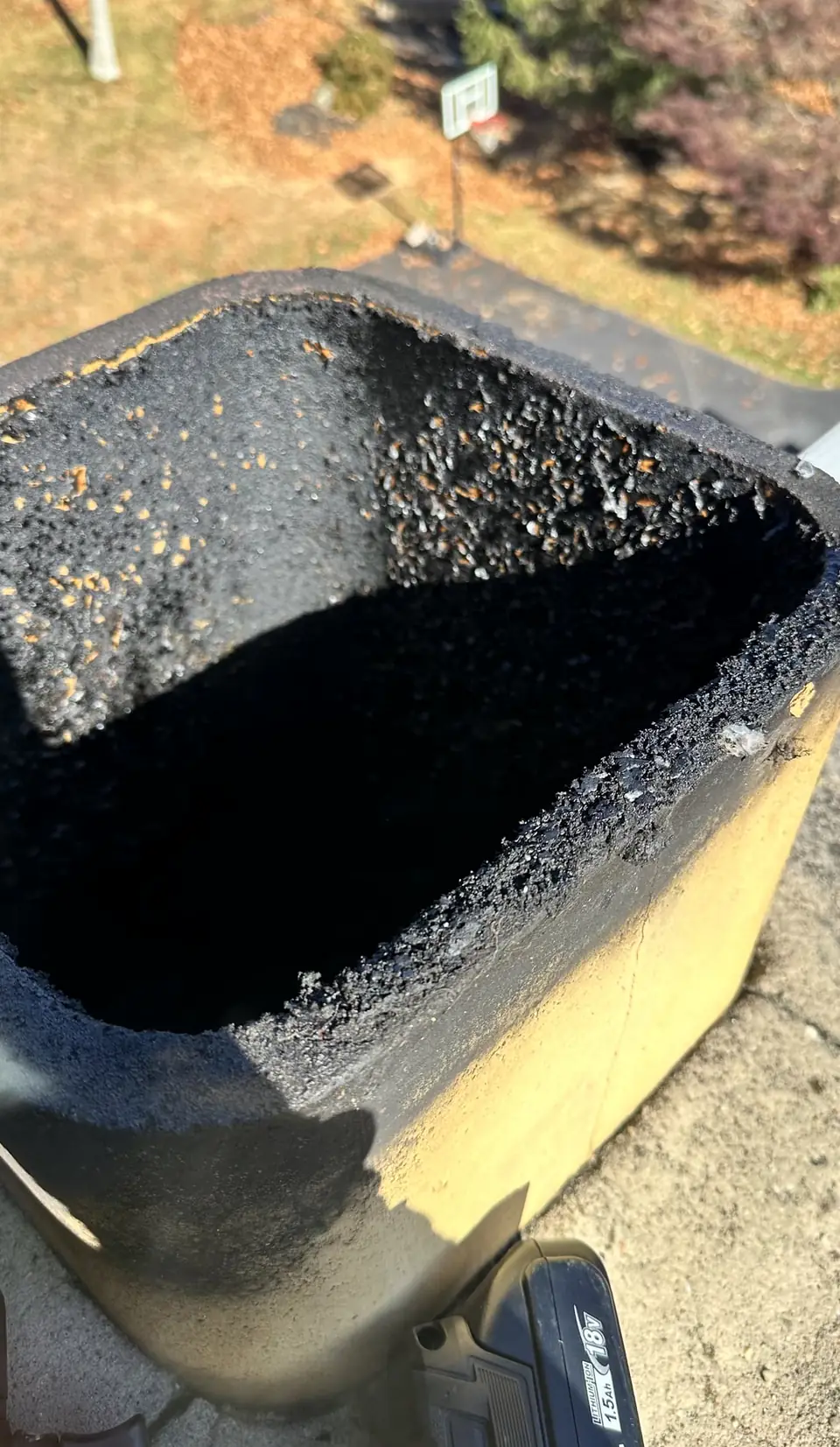
Creosote forms as wood smoke cools and condenses inside the chimney. It can appear as powdery soot, flaky material or a hard, shiny glaze; the appearance affects how difficult it is to remove, so do not try to chip or burn it out yourself.
The Chimney Safety Institute of America advises annual chimney inspection and sweeping, repair or maintenance as needed. Its homeowner guidance also identifies creosote buildup of 1/8 inch or more as a reason to have the chimney swept. See the CSIA homeowner resources for those recommendations.
A sweep should report deposits that remain or conditions that prevent a complete cleaning. If the flue has glazed creosote or damage, ask what additional evaluation or service is needed before using the fireplace again.
Smoke, Odors and Debris Can Signal More Than Routine Buildup
Some symptoms point to an airflow or condition problem that ordinary cleaning may not resolve. Stop using the fireplace and arrange professional attention when you notice a new or persistent problem.
- Smoke enters the room — Do not keep using a fireplace that repeatedly sends smoke indoors. Note when it happens and whether a window or door was open, then request an assessment of the fireplace and venting.
- The damper sticks or will not close — Do not force a stuck damper or light a fire with a suspected blockage. A sweep can remove deposits, but a damaged or obstructed part may need separate service.
- You find masonry or liner fragments — Treat falling pieces as a sign that something may be deteriorating, not as routine soot. Keep the fireplace out of use until the chimney is evaluated.
- There is a strong, persistent odor — A smoky smell can come from deposits, moisture or airflow conditions. Share when the odor is strongest and whether it appears after rain, during warm weather or while the fireplace is operating.
Need help now? (380) 234-1398
Book a Chimney Sweep With the Problem and Appliance Details
To book, tell us whether the appliance burns wood or gas, what symptoms you have noticed and whether you want cleaning, inspection or repair. Ohio Chimney and Fireplace is open 24 hours a day, 7 days a week; call (380) 234-1398 or contact us to arrange service.
Chimney cleaning starts at $89. The work and price depend on the service needed, so share any known access issues or recent changes to the chimney when you request the appointment. For cost details, see how much a chimney sweep costs in Columbus.
We explain the work clearly and recommend only services a homeowner needs. You can read more about our chimney sweep service before arranging the visit.
Frequently asked questions
Does a chimney sweep include a full chimney inspection?
Not necessarily. Sweeping focuses on removing deposits, while an inspection evaluates the chimney’s condition and has its own scope. Ask whether inspection is included when you book, especially if you have noticed damage or a change in fireplace performance.
Can I use my fireplace right after it has been swept?
Use it only after the sweep has completed the work and addressed any condition that makes operation unsafe. If the sweep reports damage, an obstruction or a need for further evaluation, wait until that issue is resolved.
Does a gas fireplace need a chimney sweep?
A gas fireplace can still have a venting system that needs attention, but its service differs from cleaning a wood-burning flue. Tell the sweep that the appliance is gas-powered and ask whether it needs gas fireplace service or an inspection.
What should I do if my fireplace still smokes after cleaning?
Stop using the fireplace until the cause is assessed; cleaning may not correct a draft problem, blockage or damaged component. Describe when smoke enters the room and ask for an inspection of the fireplace and venting.
Arrange Chimney Sweeping
Tell us what appliance you use and what you have noticed. Call (380) 234-1398 to book a chimney sweep.