
How Often Should a Chimney Be Swept?
A chimney should be inspected every year; how often it should be swept depends on creosote buildup, blockages, and its condition. An annual inspection does not always mean an annual sweep.
Need help now? (380) 234-1398
How Often Should a Chimney Be Swept? Start With an Annual Inspection
Arrange a chimney inspection every year, even if you used the fireplace only a few times. The Chimney Safety Institute of America (CSIA) summarizes the NFPA 211 guidance as an annual inspection of chimneys, fireplaces, and vents, with cleaning, maintenance, and repairs done as needed.
An inspection checks the system’s condition; sweeping removes soot and creosote deposits. The inspector’s findings, your fuel type, and how often you burn determine whether your chimney needs cleaning. Read the CSIA homeowner resources for more detail on annual inspections and sweeping.
Choose an Inspection, a Sweep, or Both for Your Chimney
The right service depends on what you burn and what the inspection finds. These options are not interchangeable: inspection identifies conditions, while sweeping removes deposits.
Annual inspection
Choose this as the yearly check, whether you burned often or rarely. It looks for changes in condition, blockages, and signs that cleaning or repair is needed.
Chimney sweep
Choose sweeping when soot or creosote has accumulated, an obstruction needs clearing, or an inspection calls for cleaning. Sweeping removes deposits rather than assessing every part of the system.
Inspection and sweep
Both may be appropriate when the inspection finds deposits that need removal. Ask what the visit includes for your fireplace and whether the recommendation is based on a specific finding.
Gas fireplace or gas appliance
Arrange an annual inspection of the chimney or vent serving the appliance. Do not assume it needs the same sweeping as a wood-burning chimney; have the vent checked and cleaned if its condition calls for it.
Signs Your Chimney May Need Sweeping Before the Annual Check
Do not rely on the calendar alone. These signs mean you should stop treating the chimney as ready for use and arrange an assessment.
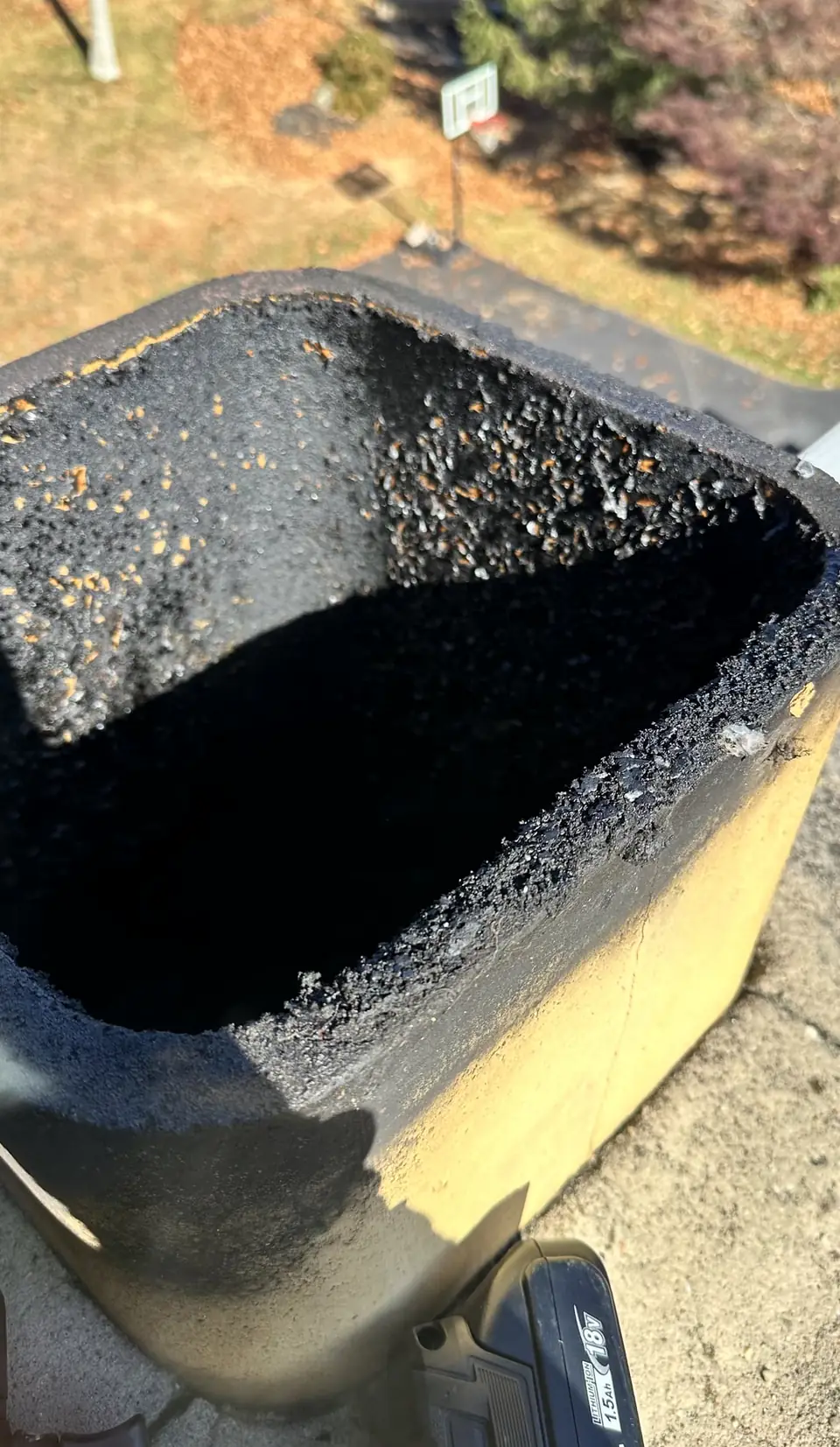
- Visible dark, flaky, or shiny deposits — Creosote can look flaky or tar-like. The CSIA advises cleaning when deposits reach 1/8 inch; do not scrape inside the flue to try to measure them yourself.
- Smoke entering the room — Smoke spilling into the living space can point to a blockage or a draft problem. Stop using the fireplace until the cause is checked rather than trying to fix the flue from the roof.
- A blocked or damaged flue — A visible obstruction, loose masonry, or a damaged chimney part needs professional attention. A sweep can determine whether cleaning alone is appropriate or whether repair is also needed.
- A change in the fireplace or chimney — A new appliance, relining, a chimney fire, or significant weather damage can call for a more detailed inspection. Tell the sweep what changed so the inspection can address it.
Need help now? (380) 234-1398
Seven Safe Checks to Make Before You Use the Fireplace
These owner-level checks help you notice warning signs; they do not replace an inspection or a chimney sweep. Let the fireplace and ashes cool completely before looking inside, and do not climb onto the roof or reach into the flue.
- Note what fuel the appliance burns — Write down whether it burns wood, gas, or another fuel and how often you use it. This helps the sweep assess the right chimney or vent and whether the cleaning need differs from a wood-burning system.
- Look into the firebox with a flashlight — With the fireplace cold, use a flashlight to check for loose brick, cracked firebrick, or heavy deposits around the firebox opening. Do not touch ash or debris that may still be hot.
- Check the damper from the firebox — Look for a damper that appears stuck, damaged, or blocked by debris. Do not force a jammed damper; note its position and have the condition checked before lighting a fire.
- Look for visible creosote without scraping — Use the flashlight to view only what you can see safely from the firebox. If deposits look thick, shiny, or widespread, stop using the fireplace and arrange an inspection rather than trying to remove them yourself.
- Check the chimney exterior from the ground — Look for visibly loose bricks, missing mortar, or parts that appear out of place. Use binoculars if needed; leave roof access and close inspection of the chimney top to a professional.
- Pay attention to smoke and odor — Notice whether smoke enters the room or a strong fireplace odor persists when the appliance is not in use. Record when it happens and stop using the fireplace if smoke is spilling indoors.
- Gather the last inspection and repair details — Find any service records and note changes such as a new appliance, chimney repair, or a significant storm. Share those details when you book so the sweep knows what conditions to assess.
Why Creosote Buildup Changes the Sweeping Schedule
Creosote forms as wood smoke cools inside the chimney. The deposit can build up at different rates, so the number of fires you have had is not enough on its own to decide whether a sweep is due.
The CSIA’s 1/8-inch cleaning threshold is a practical sign to act on, not a reason to measure or scrape the flue yourself. A professional can check the accessible areas and determine whether deposits or an obstruction require cleaning. Ohio Chimney and Fireplace offers a chimney sweep service for that work.
Do not use a fire when you suspect a blocked flue or substantial creosote buildup. Continuing to burn can expose your household to smoke and increase the chance of a chimney fire.
When a Chimney Needs More Than a Routine Annual Inspection
An annual check is the baseline, but certain changes call for a closer look. CSIA guidance recommends a Level 2 inspection after an appliance change, a home sale, relining, or a fire or weather event; that inspection includes a video scan of the flue.
Tell the sweep about the event or change when arranging service. A video inspection can reveal concealed flue conditions that a basic visual check may not show. Do not assume that a sweep alone addresses damage after a fire or storm.
Need help now? (380) 234-1398
What to Share When You Book a Chimney Sweep
When you book, identify the fuel type, how often you use the fireplace, when it was last inspected, and any smoke, odor, visible deposits, or recent damage. Ask whether the appointment is for inspection, sweeping, or both, and what the visit includes for your chimney setup.
Ohio Chimney and Fireplace serves customers at their homes and is open 24 hours a day, 7 days a week. Garrett Sullivan, the owner, has 16 years of experience with chimneys and fireplaces; the company explains the work clearly and recommends only services a homeowner needs. To arrange service, contact us or call (380) 234-1398.
What to Do After the Chimney Inspection
Ask the sweep to distinguish cleaning needs from repair findings. If sweeping is recommended, find out which deposits or obstruction prompted it; if repair is recommended, ask which part is affected and whether the fireplace should stay out of use until the work is done.
Keep the inspection findings with your home records and use them to plan the next annual check. If smoke enters the room, the damper will not open, or you spot damage before then, stop using the appliance and arrange an assessment rather than waiting for the next scheduled inspection.
Frequently asked questions
Does every chimney need to be swept once a year?
Every chimney should be inspected annually, but not every chimney needs sweeping each year. The inspection findings and amount of creosote or blockage determine whether cleaning is due.
Can I use my fireplace if I see creosote?
Do not use it when deposits look thick, shiny, or substantial, or when you suspect a blockage. Arrange an inspection so a sweep can determine whether cleaning is needed before you burn again.
Is a chimney inspection the same as a chimney sweep?
No. An inspection assesses the chimney’s condition and identifies cleaning or repair needs; sweeping removes soot and creosote deposits. One visit may include both when the findings call for it.
Does a gas fireplace chimney still need attention?
Yes. Have the chimney or vent serving a gas appliance inspected annually, because vent condition and blockages still matter. Cleaning depends on what the inspection finds, not on an assumption that every gas system needs the same sweep as a wood-burning chimney.
Schedule Your Chimney Inspection or Sweep
Share your fuel type, recent symptoms, and last inspection date when you book so the visit can address your chimney’s condition.