
Do Chimney Sweeps Make a Mess in Your Home?
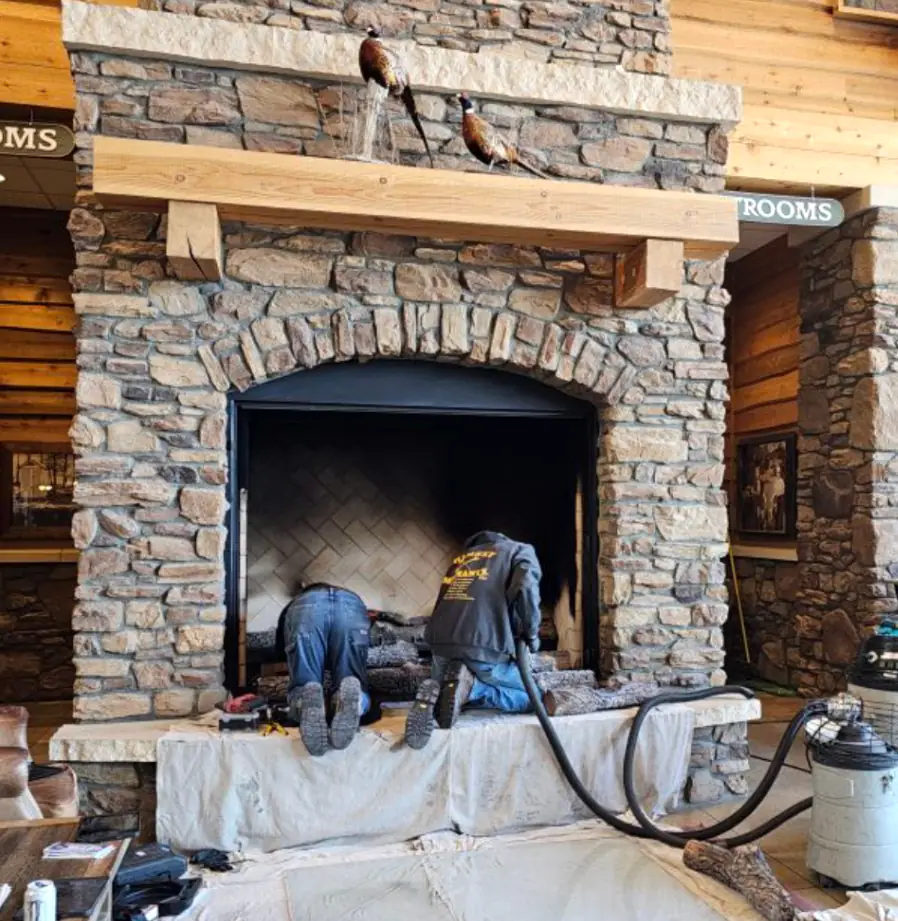
Do chimney sweeps make a mess? A professional cleaning can create soot and dust, but careful containment keeps debris focused around the fireplace instead of spreading through your home. A few simple steps before the appointment can help protect the room.
Need help now? (380) 234-1398
Why a Chimney Sweep Can Leave Soot or Dust
A chimney sweep removes soot, ash, and creosote from parts of the fireplace and flue, so some dust is possible during the work. The amount depends on how much buildup is present, how the fireplace is set up, and how carefully the work area is contained.
A strong odor or a little settled dust near the hearth is different from soot spread across furniture or other rooms. A careful cleaning should keep debris near the fireplace; visible soot well beyond the work area is a reason to ask what happened and how the area will be cleaned.
The fireplace opening does not show the full condition of the flue. The CSIA homeowner resources explain that creosote buildup matters for cleaning decisions, including a cited sweep threshold of 1/8 inch.
What Controls Soot During a Chimney Sweep?
A tidy result depends on separating the work area from the room and keeping loose residue contained. These options serve different purposes; wiping the visible hearth alone does not clean the chimney flue.
Professional chimney cleaning
A chimney sweep addresses buildup inside the fireplace and flue, where household dusting cannot reach. Ask how the work area will be protected and whether the cleaning covers the parts of your system that need attention.
Preparing the room
Moving nearby items and clearing the route to the fireplace reduces the chance of soot settling on belongings. It also gives the sweep room to set up and work around the hearth.
Wiping the firebox yourself
Removing visible ash can make the fireplace look cleaner, but it does not remove creosote from the flue. Avoid stirring up ash or using a household vacuum on fine soot, which can escape back into the room.
How to Prepare Your Room Before a Chimney Sweep
Get the fireplace and the route to it ready without brushing or vacuuming the chimney yourself. These steps help limit loose dust and make it easier to see whether debris appears outside the work area.
- Let the fireplace cool — Do not schedule active fire or hot ash for a cleaning appointment. Check that the fire is out and the firebox is cool before anyone handles the area.
- Remove fireplace accessories — Move the grate, tools, and decorative items that are easy to lift away from the opening. Check that the hearth is clear enough for the sweep to access the firebox.
- Clear a path to the fireplace — Move small furniture, toys, and floor items along the route from the entrance to the hearth. Check that there is room to carry equipment without brushing against belongings.
- Move nearby valuables — Relocate framed photos, lamps, and other items close to the fireplace. Check the mantel and adjacent surfaces as well as the floor.
- Secure pets and children — Keep them out of the work area while the fireplace is being cleaned. Check that the route and hearth stay clear throughout the appointment.
- Share what you have noticed — Tell the sweep about smoke entering the room, odors, falling debris, or a change in fireplace use. These details can help identify what needs attention beyond visible ash.
- Check the room after the work — Look at the hearth, mantel, nearby floor, and the path used to reach the fireplace. If you find soot outside the contained work area, point out the specific spots before the appointment ends.
- Keep the fireplace unused until cleanup is complete — Wait until the work area is cleared and the sweep has finished. Check that tools and loose residue have been removed before putting accessories back.
Need help now? (380) 234-1398
How Long a Chimney Cleaning Visit Takes
There is no single visit length for every chimney. Access, chimney height, the amount of buildup, and whether the sweep finds an obstruction or damage can all affect how much work is involved.
When you book, describe the fireplace type, how recently it was used, and any smoke or odor problems. Ask for an expected appointment length based on those details, and leave the room clear for the work area.
A standard chimney cleaning focuses on removing deposits; an inspection or repair may be needed if the sweep finds a separate issue. We explain the work clearly and recommend only services a homeowner needs.
What to Check for After a Chimney Sweep
A little residue near the fireplace can happen, but these signs help you decide whether to ask about cleanup or stop using the fireplace until it is checked.
- Light dust close to the hearth — Check whether it is limited to the immediate work area. Ask the sweep to address visible residue before the work area is cleared.
- Soot on furniture or in another room — Note where it appears and whether the path to the fireplace is affected. Tell the sweep rather than spreading it with dry wiping or a household vacuum.
- Smoke spilling into the room — Do not use the fireplace while smoke is entering your living space. Arrange an evaluation because cleaning alone may not address the cause.
- Debris or a strong odor after cleaning — Record where you notice it and whether it returns when the fireplace is unused. Ask the sweep to check whether residue remains or another condition needs attention.
When a Chimney Sweep Is the Right Next Step
Book a chimney sweep when you see deposits in the firebox, suspect buildup in the flue, or have not had the chimney cleaned as part of regular maintenance. Looking into the firebox from the room cannot show the full flue, so visible cleanliness is not proof that the chimney is clear.
If smoke enters the room, you hear unusual sounds, or you see fallen masonry or other debris, stop using the fireplace and describe the sign when you arrange service. Those symptoms may call for an inspection or repair, not just cleaning.
Our chimney cleaning service addresses buildup in the fireplace and chimney. For a sweep, share what you have seen and how you use the fireplace; we explain the work and recommend only what is needed.
Need help now? (380) 234-1398
What to Tell Us When Booking Chimney Cleaning
Share whether the fireplace burns wood or gas, when it was last used, and whether you have noticed smoke, odor, or falling material. Those details help identify the right service to schedule rather than treating every concern as a simple cleaning.
The chimney sweep and chimney cleaning terms can describe related work, but they are not always used the same way. Read chimney sweep vs. chimney cleaning: what is the difference? if you want to compare the terms before booking.
Ohio Chimney and Fireplace is open 24 hours a day, 7 days a week. To book, call (380) 234-1398 or contact us with the fireplace details and any signs you have noticed.
Frequently asked questions
Will a chimney sweep cover my furniture before cleaning?
Ask how the work area will be protected when you book, and move small valuables and nearby items before the appointment. After the work, check the hearth and surrounding floor while the sweep is still there.
Should I clean out the ashes before the sweep arrives?
Do not stir up or vacuum fine ash before the appointment. Let the sweep know if the firebox contains ash or debris so it can be handled as part of the work.
Can I use the fireplace if I see soot coming into the room?
Stop using the fireplace while smoke or soot is entering your home. Arrange an evaluation and describe when it happens, because the cause may require more than routine cleaning.
Does chimney cleaning remove every fireplace odor?
Cleaning removes deposits that can contribute to odors, but an odor can have another source or return under certain conditions. Tell the sweep when you notice it and whether it changes with weather or fireplace use.
Book a Chimney Cleaning
Tell us what you have noticed at the fireplace. Call (380) 234-1398 to book with Ohio Chimney and Fireplace.