
Do I Need a Chimney Cap?
Yes—a properly fitted chimney cap helps keep rain, animals and debris out of an open flue; a screened cap can also help contain sparks. For the right fit, see our chimney cap installation service.
Need help now? (380) 234-1398
Do I Need a Chimney Cap on My Flue?
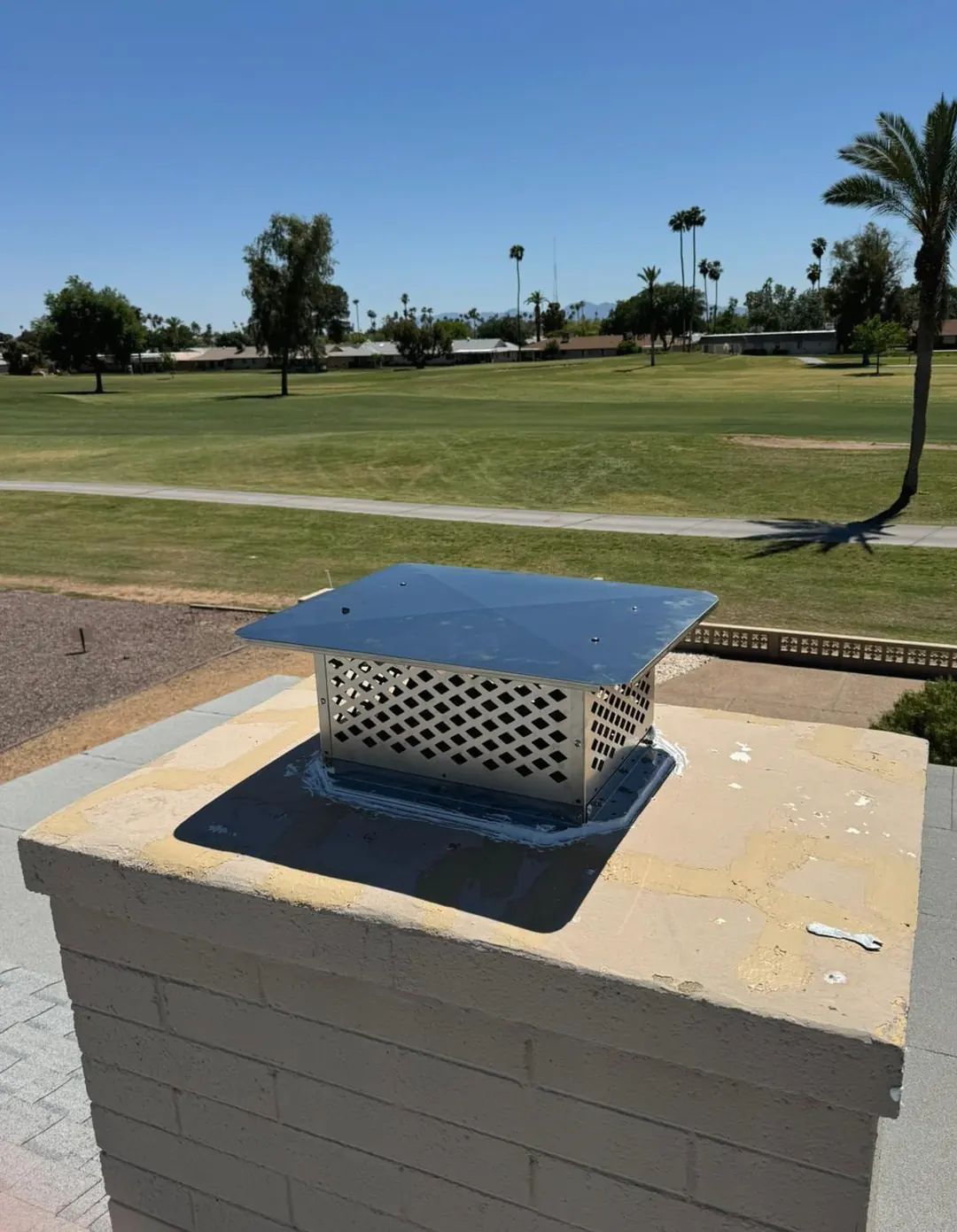
A cap is a cover fitted over the top of a chimney flue. Its job is to shield the opening from rain, leaves and animals while leaving a clear path for exhaust to exit. A screened cap can also help keep sparks from escaping the flue.
A missing, loose or badly corroded cap deserves attention, but the replacement needs to match the chimney. A cap that blocks the flue or fits poorly can interfere with venting, so do not cover an opening with an improvised lid or mesh.
A cap is not a repair for every chimney problem. It will not fix a cracked crown, damaged masonry, faulty flashing or an obstruction lower in the flue.
What a Chimney Cap Keeps Out—and What It Cannot Fix
Use these clues to separate a cap issue from other chimney damage. A view from the ground can suggest a problem, but it cannot confirm that the cap or flue is safe.
- Water at the fireplace or firebox — Rain entering an uncapped flue can contribute to dampness, staining or a musty smell. Water can also enter through a damaged crown or flashing, so a cap alone may not solve a leak.
- Birds, animals or nesting material — A cap with a properly fitted screen can help discourage animals and debris from entering the flue. If you hear movement or find nesting material, do not reach into the chimney or try to force an animal out.
- A cap that is tilted, loose or visibly rusted — These signs can mean the cap is no longer secured or has deteriorated. Keep clear of the roof and arrange an inspection rather than pulling at a cap from a ladder.
- Smoke or poor draft — Smoke entering the room is not proof that the cap is the cause. A blocked flue, damper problem or other venting issue can produce similar symptoms; stop using the fireplace until the cause is checked.
Which Chimney Cap Fits Your Chimney?
Cap choice depends on the flue opening and chimney construction. The outside appearance alone does not show whether a cap will fit, so compare the opening and appliance type before selecting a replacement.
Single-flue cap
This style covers one flue opening. It must match that flue’s dimensions and attachment method; a cap that is too small will not secure correctly, while one that is too large may not sit properly.
Multi-flue cap
A larger cap can cover several flue openings together. The installer needs to check the crown area, clearance around each opening and how the cap will attach without obstructing the flues.
Cap for a factory-built chimney
Factory-built systems need a compatible cap for the chimney’s construction. Do not assume a masonry chimney cap will fit; identify the system and check the correct replacement requirements.
Screened cap
Mesh around the cap can help keep animals and larger debris out and help contain sparks. The screen must stay clear; buildup can restrict the opening and affect venting.
Need help now? (380) 234-1398
How to Check Whether Your Chimney Needs a Cap
Use these steps to gather useful information without climbing onto the roof or putting anything into the flue. They help identify what to report; they do not replace a close inspection.
- Let the fireplace cool completely — Wait until there is no fire, ember or heat before checking around the fireplace. Confirm the appliance is fully cold before looking inside.
- Look up from the ground — Use binoculars from a safe spot to view the chimney top. Check whether a cap appears to be present, tilted, damaged or missing; do not climb a ladder to get a closer look.
- Note the appliance type — Write down whether the chimney serves a wood-burning fireplace, stove or gas appliance. Check the appliance label or manual if you are unsure, because cap compatibility depends on the venting system.
- Check the fireplace opening with a flashlight — With the fireplace cold, use a flashlight to look for visible debris or signs of an obstruction from the opening. Do not reach into the flue, scrape its walls or try to remove a nest.
- Look for water clues indoors — Check the firebox and nearby walls for dampness, staining or loose material, and note when you see it. These clues can point to water entry but do not identify whether the cap, crown or flashing is responsible.
- Record smoke or draft symptoms — Write down when smoke spills into the room, whether it happens at startup or throughout a fire, and whether the damper moves. Do not keep using the fireplace to test a suspected venting problem.
- Share your notes before booking — Have your observations and appliance type ready when you contact us. This helps focus the conversation on whether the cap, the flue or another part needs attention.
What Warning Signs Mean a Chimney Cap Needs Attention?
A cap that has come loose can shift farther in wind or weather, and a rusted cap may no longer protect the opening reliably. A screen clogged with soot, leaves or other material can also reduce the open area available for exhaust.
Do not try to clear a screen or secure a cap from the roof. A fall can cause severe injury, and disturbing a blocked flue can push debris into the chimney or damage its parts. Keep people away from the area below a visibly loose cap and arrange professional help.
Water stains do not automatically mean the cap needs replacement. A chimney sweep can check the cap alongside the crown and flashing to identify where water is entering.
How Chimney Cap Installation Should Fit the Flue
A sound installation starts by identifying the chimney type and measuring the flue or crown area that will hold the cap. The cap must fit its opening, attach securely and leave the flue clear for exhaust; the correct mounting method differs between chimney systems.
Before work, the condition of the surface matters too. A cracked or deteriorated crown may not hold a cap securely, and a cap will not repair that masonry. If you want to compare installation cost with other cap choices, see how much a chimney cap costs. Our chimney cap installation starts from $200.
After installation, the cap should sit securely without blocking the flue, and the screen should be free of debris. A cap that rattles, sits crooked or is the wrong size needs correction rather than an improvised adjustment.
Need help now? (380) 234-1398
When a Cap Problem Needs a Chimney Sweep
A cap cannot take the place of chimney inspection or cleaning. The Chimney Safety Institute of America explains that chimneys should be inspected at least once a year; cleaning depends on the condition of the system. See its homeowner resources on chimney inspection and sweeping for guidance.
Contact a sweep when you see an obstruction, notice smoke coming into the room, find fallen masonry or cannot tell whether water is coming through the cap or another part of the chimney. Stop using the appliance if venting is poor until the issue is checked. You can also read about our chimney sweep service in Columbus.
The sweep can assess the cap together with the flue and nearby chimney parts. That matters because replacing a cap without addressing a blocked flue or damaged crown leaves the underlying issue in place.
What to Do Before You Book Chimney Cap Work
Gather the appliance type, any known chimney details and the symptoms you observed from the ground or indoors. A clear description of water entry, animal sounds, visible cap damage or smoke behavior helps narrow down what needs to be checked.
Do not buy a replacement cap based only on a photo or guess at the flue size. The opening, chimney construction and attachment method all affect fit, and an incompatible cap can obstruct venting or fail to stay in place.
Ohio Chimney and Fireplace is open 24 hours a day, 7 days a week. Use the contact page to book chimney cap service and share the details you collected.
Frequently asked questions
Can I install a chimney cap myself?
Roof work carries a fall risk, and the cap must match the flue and attach securely without obstructing exhaust. Check the chimney from the ground, then have a professional handle roof access, fit and installation.
Will a chimney cap stop a leak?
A cap can keep rain from entering an open flue, but it will not repair a cracked crown or failing flashing. Water stains need a check of the chimney top and surrounding roof area to locate the entry point.
Can a chimney cap make smoke come into the house?
A cap that is too small, blocked or incompatible with the chimney can interfere with venting. Smoke can also come from other draft or flue problems, so stop using the fireplace and have the whole venting path checked.
Does every chimney cap need mesh?
No. A screened cap can help keep animals and debris out and contain sparks, but the right design depends on the chimney and appliance. The screen also needs to remain clear so exhaust can pass through.
Get the Right Chimney Cap
Call Ohio Chimney and Fireplace at (380) 234-1398 to book chimney cap service.