
How Much Does a Chimney Cap Cost in Columbus, OH?
In Columbus, chimney cap installation starts at $200. If you need the chimney checked before choosing a cap, chimney inspection starts at $39; cap fit and chimney-top condition shape the work.
Our Starting Price in Columbus
| Service | Price |
|---|---|
| Chimney Cap Installation | From $200 |
Need help now? (380) 234-1398
How Much Does a Chimney Cap Cost to Install?
Our starting price for chimney cap installation is $200. That covers a starting point for the installation service, not a promise that every chimney top needs the same cap or the same work.
The right cap has to match the flue opening and the chimney top it attaches to. The size and layout of the opening, the cap style, and whether the crown or other surrounding parts need repair can change the scope. A visit may take longer when the chimney top needs attention beyond fitting a cap; the time depends on access and the work involved.
We explain the work clearly and recommend only the services a homeowner needs. Ask which opening the proposed cap will cover and whether the work includes only the cap or also a separate repair.
Which Chimney Cap Starting Price Fits Your Situation?
These examples help separate cap work from inspection or cleaning. They are starting prices for different services, not interchangeable versions of the same job.
- The cap is missing or visibly damaged — When the flue opening needs a replacement cap and the surrounding top does not need separate repair, chimney cap installation starts at $200. A sweep should check that the cap suits the opening rather than choosing by appearance alone.
- You cannot tell whether the cap or chimney top is the problem — A chimney inspection starts at $39. It gives the sweep a chance to check the cap area and distinguish a cap issue from damage to the crown, masonry, or another part of the chimney.
- You are also concerned about buildup inside the flue — Chimney cleaning starts at $89 and addresses buildup, not cap replacement. A cap does not remove creosote, and cleaning does not replace a missing or damaged cap.
Which Chimney Top Option Matches the Problem?
A cap, crown, and chase cover serve different parts of a chimney. Identifying the damaged part first helps prevent paying for the wrong repair.
A cap for one flue opening
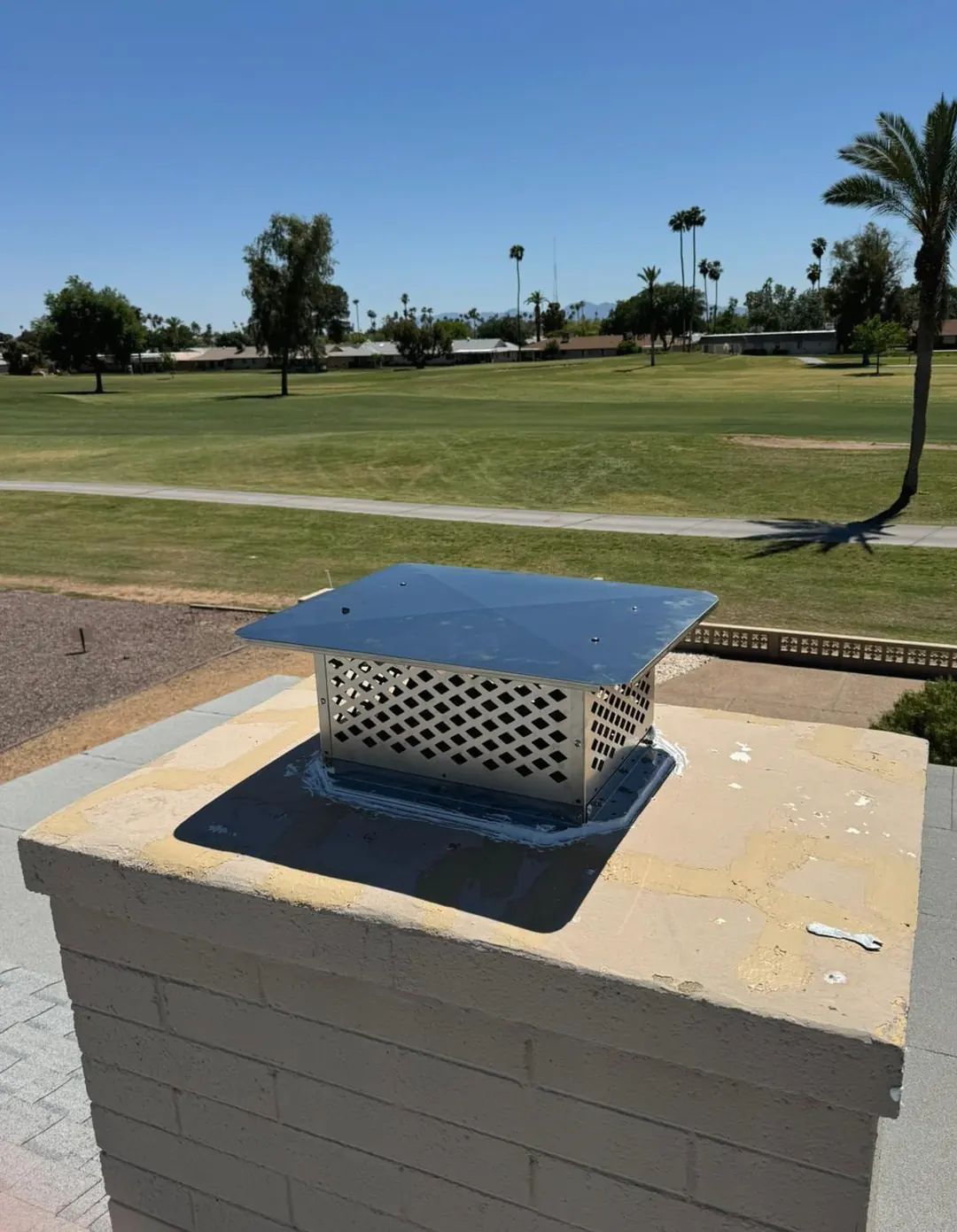
A single-flue cap sits over one flue opening. It may fit a chimney with one opening that needs a cover, provided the cap matches the opening and attachment point.
A cap spanning multiple flues
A multi-flue cap covers more than one opening from a shared mounting area. The sweep needs to check the layout and dimensions so the cap covers the intended openings without blocking them.
A crown or chase-cover repair instead
The masonry crown is the top surface around the flue on a masonry chimney; a chase cover is the lid on a framed chimney chase. Cracks, rust, or leaks at those parts call for assessment of that component, not an assumption that a new flue cap will fix it.
Need help now? (380) 234-1398
What Chimney Cap Installation Includes
Cap installation involves matching a cap to the flue opening and securing it at the chimney top with suitable attachment hardware. The job should account for the number and arrangement of flues, the way the cap attaches, and whether the surface around it is sound enough for installation.
A cap installation is not the same as crown repair, chase-cover replacement, or chimney cleaning. If the top is cracked, loose, rusted, or otherwise damaged, that condition may call for separate work. Ask the sweep to identify the part and show how it affects the proposed scope.
The visit length varies with access, measurements, and whether a separate repair is needed. Confirm what the visit will cover before booking; a cap-only installation and a visit that also addresses chimney-top damage are different scopes.
What to Check Before Booking a Chimney Cap
Use these ground-level checks to describe the problem clearly. Do not climb onto the roof, loosen a cap, or reach into the flue.
- Look at the chimney from the ground — Use binoculars if you have them, and check whether a cap is visible over the flue opening. Note whether it appears tilted, loose, or absent; do not climb up to confirm.
- Identify the chimney-top shape — Notice whether the top appears to be masonry with a crown or a framed chase with a metal cover. This helps distinguish a flue-cap concern from a problem with the larger top cover.
- Take clear photos — Use a phone camera with zoom from a safe place. Capture the whole chimney top and any visible rust, cracks, or displaced parts so you can describe what prompted the call.
- Write down what you noticed indoors — Record any water marks near the fireplace, animal sounds, or changes you have observed. These signs do not prove the cap is the cause, but they help the sweep assess what to check.
- Note the appliance and fuel — Tell the sweep whether the chimney serves a wood-burning fireplace, a gas fireplace, or another appliance. Different setups can require different compatible parts.
- Keep clear of roof work — Do not remove old fasteners or try to measure the flue from the roof. A loose cap or damaged masonry can shift underfoot or leave an opening exposed.
- Ask what the visit will cover — Describe the cap and any nearby damage, then ask whether the work is a cap installation or also involves inspection or repair. We explain the work clearly and recommend only services a homeowner needs.
- Check the finished work from the ground — After installation, look from a safe position to see whether the cap appears level and in place. Ask the sweep to point out the installed part and any separate condition that still needs attention.
Signs the Chimney Needs More Than a New Cap
A cap may be one part of the issue, but visible damage elsewhere at the chimney top can change the work. Share these observations rather than assuming a cap replacement will address them.
- Cracks around the flue — Cracks in the masonry surface around the flue may point to crown damage. Have the area assessed before treating the cap as the only needed work.
- Rust or a distorted chase cover — Rust, holes, or a bent metal cover on a framed chimney can indicate a chase-cover issue rather than a problem with the small cap over a flue.
- Water marks or dampness indoors — Water near the fireplace can come from more than one part of the chimney. A cap might be relevant, but the crown, flashing, or masonry may also need inspection.
- Animal activity or debris — Sounds or debris can signal an opening that needs attention. Avoid reaching into the flue; tell the sweep what you noticed and where.
Need help now? (380) 234-1398
Why a Poorly Matched Chimney Cap Can Cause Trouble
A cap that does not fit the flue opening or attach securely can leave gaps, shift out of place, or interfere with the opening it is meant to cover. A cap chosen without checking the chimney top can also leave crown or chase-cover damage unaddressed.
Do not force a cap into place or improvise with loose hardware. If a cap is unstable, missing, or visibly damaged, keep people away from roof access and arrange a chimney assessment. For help deciding whether a cap is needed at all, read do I need a chimney cap?
A chimney crown problem is a different repair from cap installation. Our guide to how much chimney crown repair costs can help you understand why the damaged part matters.
How to Book Chimney Cap Installation
When you book, share the chimney type, the number of visible flue openings, what you can see from the ground, and any indoor signs such as water marks or animal sounds. Photos can help describe the concern, but they do not replace checking the chimney top.
Tell us whether you are asking for a cap installation, an inspection, or both. Our chimney cap installation service starts at $200, and we can explain the work clearly and recommend only what the chimney needs.
For scheduling, contact us with the details you have. If the assessment points to crown damage rather than the cap itself, ask which part needs repair before approving the work.
Frequently asked questions
Can I install a chimney cap myself?
A chimney cap sits at roof level, so reaching it can expose you to a fall, and the cap must fit and attach securely. Do not climb up or improvise a repair; describe what you can see from the ground and have a chimney sweep assess the fit.
Is a chimney cap the same as a chimney crown?
No. A cap covers the flue opening, while the masonry crown is the surface around the flue at the top of a masonry chimney. A damaged crown may need its own repair even when a cap is also present.
Can I use my fireplace if the chimney cap is missing?
A missing cap leaves the flue opening exposed, but it does not reveal the condition of the rest of the chimney. Have the opening and chimney top assessed before assuming the fireplace is ready to use.
How often should I check the chimney cap?
Look for visible changes from the ground, such as a cap that appears tilted or missing, and arrange an inspection if you see damage or notice a new problem. The CSIA homeowner resources describe the recommendation for annual chimney inspections; review the guidance here.
Get the Chimney Cap Checked
Share what you see from the ground and contact us to arrange the right chimney service.