
Do I Need a Chimney Liner?
Do I need a chimney liner? You do when your chimney lacks a compatible liner, the existing one is damaged, or a new appliance requires a different venting setup. An inspection identifies whether repair, relining, or no liner work is the right next step.
Need help now? (380) 234-1398
What a chimney liner does for your fireplace or appliance
A chimney liner creates the passage that carries combustion gases from a fireplace or heating appliance up and out of the home. It also separates those hot gases from the chimney structure. A liner must suit the appliance, fuel, and chimney; a liner that is cracked, missing, or mismatched can leave the system unable to vent as intended.
The answer is not automatically “install a new liner.” An existing liner may be suitable and intact, or it may need repair or replacement. A chimney inspection helps determine which condition applies before you commit to work.
How to decide which chimney liner option fits
The right choice depends on the chimney’s construction and condition, plus the appliance it serves. These are common approaches to ask about during an assessment—not a substitute for matching a liner to your particular system.
Keep a sound existing liner
An existing liner may remain in service when an inspection finds it intact and compatible with the appliance. Ask the sweep to identify the liner type and note any damage or restrictions.
Replace a damaged or unsuitable liner
A replacement may make sense when the current liner is deteriorated or does not fit the appliance’s venting requirements. The proposed liner should be selected for the appliance and chimney, not chosen by material name alone.
Consider a stainless steel liner
A stainless steel liner is one possible relining option, but it is not automatically right for every chimney. The size, route, appliance connection, and condition of the surrounding chimney all matter.
Assess a chimney with no usable liner
When there is no suitable liner, an installation plan needs to address the full route from appliance connection to chimney top. Ask how the liner will fit the existing chimney and how the completed installation will be checked.
Signs your chimney liner may need attention
Some liner problems are hidden inside the flue, so a symptom alone cannot confirm that you need replacement. Share what you notice and have the liner inspected rather than trying to reach into the chimney or climb onto the roof.
- Pieces of tile or liner material — Fragments in the firebox or visible gaps in a clay tile liner can point to deterioration. Avoid using the fireplace until a chimney sweep checks the flue.
- Smoke escaping into the room — Smoke entering the home can have more than one cause, including a venting problem. Stop using the appliance if smoke continues to spill inside and arrange an inspection.
- A new or changed appliance — A new appliance or a change in how the chimney is used can affect liner suitability. The appliance’s make, model, fuel, and installation information help the sweep assess the venting setup.
- Damage after an event — A chimney fire or significant weather event can damage parts of a chimney that are not visible from the room. Request an assessment before using the system again.
Need help now? (380) 234-1398
Seven homeowner steps before choosing chimney liner replacement
These steps help you gather useful information without dismantling the appliance or entering the chimney. Leave the inspection and liner work to a chimney professional.
- Identify the appliance and fuel — Write down whether the system serves a fireplace, wood stove, or gas appliance, and record the fuel it uses. Check that the information matches the appliance you plan to keep using.
- Find the appliance information — Use the owner’s manual or safely visible rating plate to note the make, model, and venting instructions. Do not remove panels or move a connected appliance to search for a label.
- Describe the chimney’s history — Note any known liner repair, previous relining, appliance change, or damage event. Check old paperwork or photographs if available, and distinguish what you know from what you are unsure about.
- Look from a safe indoor position — With a flashlight, look only at areas you can see from the room, such as the firebox and its visible opening. Do not reach into the flue; record loose material, visible cracks, or smoke marks for the inspector.
- Photograph visible details — Take clear pictures of the appliance label, firebox, and any visible damage from a safe location. Check that the photos show the details you intend to ask about without requiring you to climb or remove parts.
- Request an inspection before selecting a liner — Share your notes and ask the sweep to assess the existing liner and its fit for the appliance. Check that the recommendation identifies the problem being addressed, not just a proposed material.
- Review the installation plan — Before booking the work, ask what the quoted scope includes, how the liner connects to the appliance, and how the finished installation will be checked. Confirm that the plan reflects the appliance and chimney assessed.
Why a chimney inspection comes before relining
A liner runs through the chimney, so an assessment needs to consider more than what is visible at the fireplace opening. The chimney’s route, condition, existing liner, and appliance connection all affect which solution can fit. The Chimney Safety Institute of America’s Level 2 inspection procedure describes a Level 2 inspection for situations including relining, appliance changes, a home sale, or a fire or weather event; it calls for a video scan of the chimney interior.
That scan can help reveal defects a ground-level or room-level look cannot show. Ask what inspection is appropriate for your situation and what the findings mean for the liner, rather than assuming every chimney needs the same work.
What to clarify about chimney liner installation
A clear installation plan should identify the liner selected, the appliance it serves, the route through the chimney, and how the liner connects at the appliance and chimney top. It should also say whether the inspection found separate chimney repairs that need attention. Those details help you distinguish necessary liner work from unrelated recommendations.
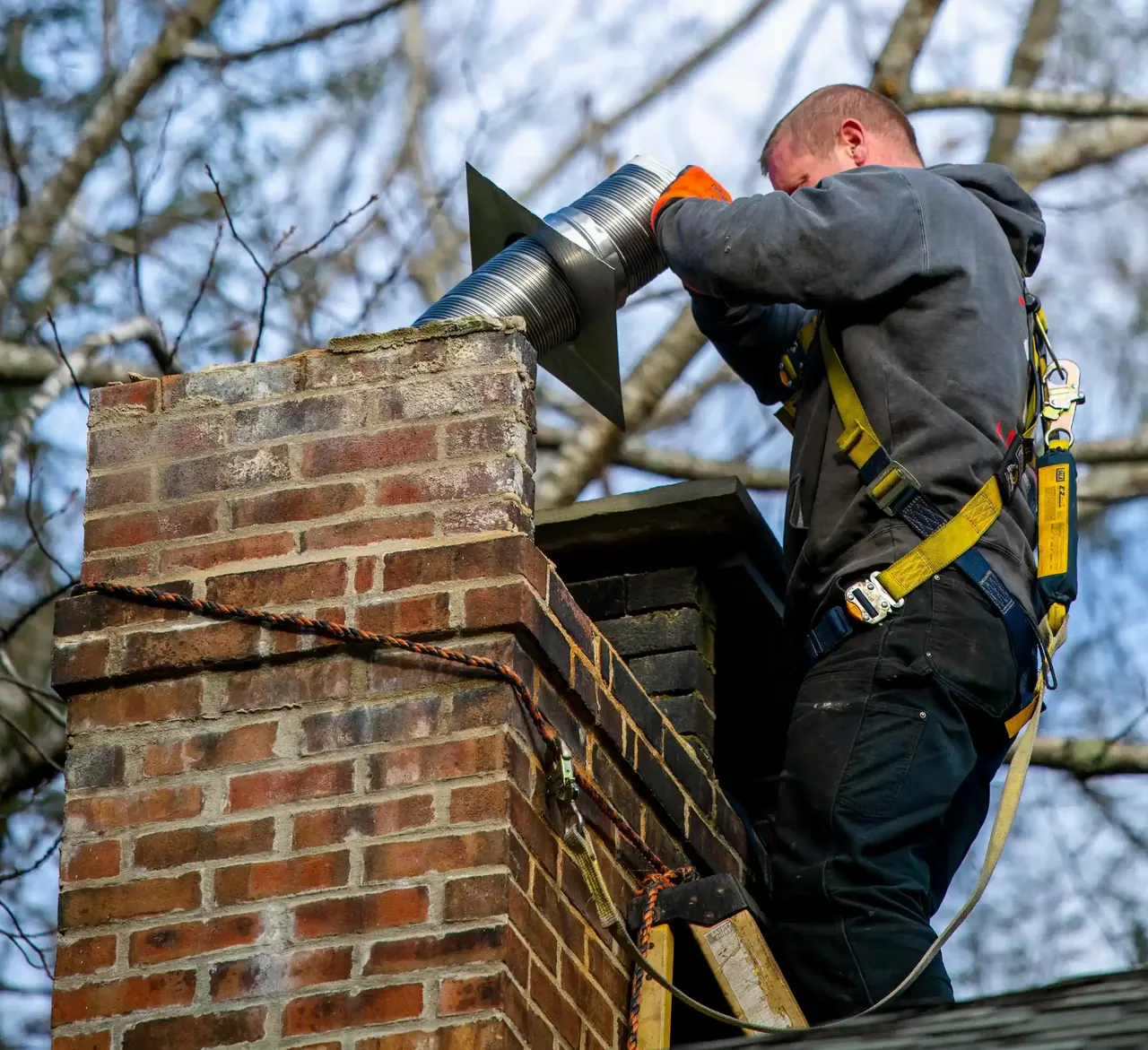
Inspection and installation are separate stages, and the time needed depends on the work being done and the chimney’s condition. Ask for the expected duration of each stage when booking so you can plan around the visit. Ohio Chimney and Fireplace offers a chimney liner installation service; installation starts at $899.
For a cost breakdown, see how much a chimney liner costs. The condition and configuration of the chimney affect the work required, so compare estimates by their stated scope as well as the total.
Need help now? (380) 234-1398
When liner damage means you should stop using the fireplace
Do not use the fireplace or appliance if you can see loose liner pieces, an apparent gap, or damage that could affect the flue. Smoke entering the room is also a reason to stop using it and arrange an assessment; do not try to patch a liner or clear the flue yourself.
A chimney sweep can inspect the system and determine whether the issue is a liner repair, a replacement, or another venting problem. We explain the work clearly and recommend only services a homeowner needs. To book an assessment, contact us with the appliance details and the signs you have noticed.
Frequently asked questions
Does every chimney need a new liner?
No. A chimney with an intact liner that suits its appliance may not need replacement. An inspection can establish whether the existing liner is usable, damaged, or incompatible with the current setup.
Can I use my fireplace if I see pieces of liner in the firebox?
Stop using it until a chimney sweep checks the flue. Loose pieces can indicate damage, but an inspection is needed to find out how far it extends and what work is appropriate.
Is a stainless steel chimney liner always the best choice?
No single liner type fits every chimney and appliance. The chimney’s condition and route, the appliance, and its fuel all factor into the selection.
Should I have a chimney inspected before relining?
Yes. The inspection helps identify the chimney’s condition and the liner requirements before work is selected. CSIA’s Level 2 procedure includes relining among the situations for a Level 2 inspection and calls for a video scan.
Get the chimney assessed before choosing a liner
Share your appliance details and what you’ve noticed so we can assess the chimney and explain the work needed.